
Category: Europe
How the ‘Germans’ are changing the largest Roma enclave…

The thousands of Roma from Bulgaria’s Stolipinovo enclave who commute to Germany to earn an income are referred to as “the Germans.” During the summer they return – and are slowly changing the area.
“There was good work to be had in Germany last year: Demolition work – by hand, not with explosives. As soon as a participating Turkish construction company had a job opening they placed a call to Stolipinovo. And one of our guys was on the road the next morning,” says Gulce, from the Roma enclave of Stolipinovo in the Bulgarian city of Plovdiv. Most of her relatives and a number of her neighbors are already in Germany.
“They all do pretty well, they have work and apartments. A few families were on welfare but they have work now.” Most of Stolipinovo’s Romani travel to Dortmund or Cologne, says Gulce. Stolipinovo, Europe’s largest Roma enclave, was started as a “Roma village” near Plovdiv in the late nineteenth century. Meanwhile, Plovdiv has grown and Stolipinovo is in the heart of it.
The enclave saw a population explosion in the early 1990s, after a leading politician promised free electricity for inhabitants during an election campaign. As a result, Roma from across Bulgaria flooded into Stolipinovo. Today, it is hard to say just how many people are here. It is estimated that somewhere between 30,000 and 40,000 Roma live in Stolipinovo.
The enclave is a typical example of improvised housing. Kiosks and shanties pop up all over the place on a daily basis – without blueprints or building permits. Local administrators regularly have them torn down but a week later they are back. Two years ago, a dozen illegal buildings were torn down in response to complaints lodged by neighbors. The unusual thing was that those complaints came from other Roma who earned good money in Dortmund and lived in nice houses on the same street. One refers to those neighbors as “the Germans.”
‘They have different habits’
“One recognizes them right away when they come home for the summer. In the enclave, I walk around in my slippers and that is fine with me. But they dress well, they have real shoes. And they are clean,” says Gulce. “They don’t show off, they just have different habits. That made me change the way I go out. I try to dress better.”
Last year, a group of visitors from Dortmund came to Stolipinovo. They were mainly city representatives as well as non-governmental organizations (NGOs) that assist Bulgarian Roma laborers in Germany. The contingent was in Stolipinovo to explain to residents that one cannot get a work permit in Germany overnight and that one also has to fulfill certain requirements. First, one has to complete a German language course, then one has to undergo training and get the necessary paperwork taken care of. Only then can one find legal work, said the Dortmund representatives. There were long faces in the crowd, a little bit of giggling and some bewilderment, too, but all told, the message seems to have gotten across.
Within one year, some 300 Roma fulfilled those requirements and found legal work in Dortmund. And those are the ones who return to Stolipinovo during the summer. When they return, they bring a new mentality with them. They remain, however, a minority. Of the thousands of Roma who annually commute to Dortmund and Cologne looking for work, few have the patience or tenacity to clear all the bureaucratic hurdles.
A ‘German’ opportunity in Stolipinovo
“I traveled to Dortmund with my husband and kids. But we couldn’t stick it out for more than four months. We didn’t have papers and my husband’s aunt wanted €150 ($185) a month for a room that we rented from her. We couldn’t come up with the money. How could we? We didn’t have work,” says Nigiar. Her family returned to Stolipinovo, but many others stayed because they eventually found work. Most of them got work in restaurants or on building sites, working – often illegally – for Turkish companies.
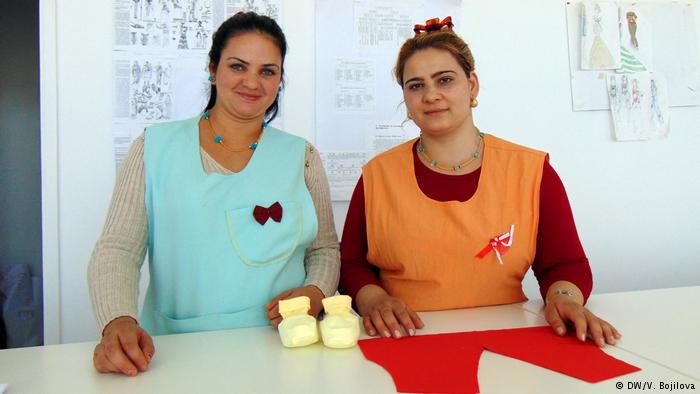
Recently, the Dortmund Rotary Club and Bulgarian NGOs founded a sewing shop in Plovdiv. Unemployed women from Stolipinovo can undertake six months of training there and when they have successfully completed that training they are given employment in the shop. Twenty women applied for the training program. The only problem is that the shop has just eight sewing machines.
A number of new houses have been built in Stolipinovo since Bulgarians were afforded freedom of movement within the EU in 2014. Most of the houses were built illegally. But many of the “Germans” have begun buying apartments in prefabricated buildings on the edges of Stolipinovo. The buildings are generally inhabited by non-Roma residents.
But living here allows the “Germans” to stay close to their community when they return home for the summer. Here they can live legally and in a more “civilized” manner. And the apartments are affordable: One can buy a 60 square meter (650 square foot) apartment for about €25,000. And the area around the apartment blocks is clean. There is no garbage on the streets and that is something that impresses the residents of Stolipinovo. Meanwhile, many are trying to follow the example.
‘In Turkey they beat us, in Germany they help’
“We are waiting for the ‘Germans,’ business is good when they are around,” says Gulce, who runs a small shop that sells household goods. A friendly young man in the shop adds that one can tell the “Germans” from the locals by their purchasing power, their homes and their clothes.
Sasho also tried his luck in Germany but in the end he came back to Stolipinovo. “Our kinds can’t even speak good Bulgarian after they finish school here and in Germany they learn the language within three months,” he sighs. One reason for that is the fact that many in Stolipinovo don’t see themselves as Bulgarian Roma but rather as Turkish Roma. “Then wouldn’t it make sense to look for work in Turkey, where you can speak the language?” I ask. Sasha just laughs: “Oh no! In Turkey they beat our people. In Germany they help us.”
Stolipinovo is slowly transforming. Although it will be a long process, the first signs are discernible. “You know sister, in Germany the police penalize you for spitting the hulls of your sunflower seeds on the street,” Nigiar tells me as she talks about garbage on the streets. Garbage cans and dumpsters are scarce in Stolipinovo, municipal administrators are not very concerned about the issue. So Gulce has set up two black garbage bags in front of her shop to help keep the street clean. That is something she saw when she visited her uncle in Dortmund.
Nigella Lawson, television chef

Nigella Lawson, the television chef, could be forced to undergo a medical examination – including blood tests for illegal drugs – to obtain a visa for the United States, lawyers have said.
Miss Lawson was prevented from boarding a flight to Los Angeles on Sunday because of an earlier court confession that she took drugs.
Charlotte Slocombe, a US attorney and British solicitor for the London-based law firm Fragomen, said Miss Lawson was likely to be required to see a doctor appointed by the US Embassy as part of a new application for a visa.
“Given the history, she will most likely have to be seen by a physician who will ask about her drug habits,” said Miss Slocombe.
“Blood tests are almost certain to be requested. There is no doctor-patient confidentiality – all the results go straight back to the embassy.”
Miss Slocombe said the celebrity also faced the possibility of a visa being denied because of the drug-taking admissions.
Miss Lawson, 54, would then have to go through a further lengthy bureaucratic process to persuade the authorities that her drug confessions were no longer relevant.
The star made her confession under oath during a trial last year that she had snorted cocaine and smoked cannabis in front of her children.
Despite a public controversy, Scotland Yard decided not to act over her confession but the US authorities appear to have taken a tougher stance.
Miss Lawson was travelling alone when she checked in at Heathrow’s Terminal Five on Sunday morning to catch a direct British Airways flight to LA.
According to eyewitnesses, she checked in and went through security checks before being informed that she would not be allowed to board the aircraft.
The star was forced to return to the first class check-in to collect the luggage that she had planned to stow in the hold.
It is thought that the airline had been told by US authorities not to allow her to travel to California where she would have been refused entry.
Before her Heathrow humiliation, Miss Lawson had posted on Twitter in the early hours of Sunday that she was “packing for my holiday”. Her entry included a picture of a sun hat and some Colman’s mustard.
Miss Lawson is said to be a regular visitor to the States for pleasure and work.
The US authorities are well known for their tough line on drug users.
Britons who want to travel to America under the “visa waiver” programme must answer several questions about drug habits and other convictions.
However, US officials also have broader powers to refuse applications to people who have made “admissions to the elements of the offence”.
Susan McFadden, a US attorney of London-based Gudeon and McFadden, said: “If the doctor finds the applicant is a drug abuser than that person is ineligible for a visa.
“This can be set aside only if the consular official recommends that the ineligibility for a visa should be waived. this is something that has to be decided by the Department of Homeland Security in Washington and the process can take six or seven months.”
Airlines are required to supply US security officials in advance with details about all passengers on flights to America so they can be screened against Washington’s ‘no fly list’ of suspects linked to terrorism.
The carriers must also check that passengers have a valid visa or other authorisation to enter the US before they take off from the UK.
Weeks after her cocaine confession, Miss Lawson flew into America on New Year’s Day to film a live interview promoting the second series of The Taste USA.
The show was broadcast in January and February, having been filmed before TV’s “Domestic Goddess” admitted taking drugs.
But it would appear that American border protection officers appear to have hardened their position since January.
Roughly 100,000 people enter the US every day with around 366 deemed inadmissible and refused entry, according to US government statistics.
Miss Lawson’s travel ban comes after a difficult 12 months for Miss Lawson, who has endured a bitter public divorce from her former husband Charles Saatchi.
The marriage broke down irrevocably after art collector Mr Saatchi, 70, accepted a caution for assault when newspapers printed pictures of him with his hand around his wife’s throat outside Scott’s restaurant in Mayfair in June.
Miss Lawson then had to give evidence at the trial of her former housekeepers, Francesca and Elisabetta Grillo, who were accused of stealing hundreds of thousands of pounds from her and Mr Saatchi.
While insisting she had never been an addict or habitual user of drugs, she confirmed she had taken cocaine.
She said she needed the drugs to cope with the death of her first husband, John Diamond, and the difficulties of living with her second, Mr Saatchi.
The cook also described how she “smoked the odd joint” of cannabis in the last year of her marriage to Mr Saatchi to make “an intolerable situation tolerable”.
But she maintained that she was now drug-free, telling the jury: “I did not and do not have a drug problem, I had a life problem. I decided to address that.”
Miss Lawson was never arrested, and Scotland Yard said in January that she would not face any police action over her admission of drug-taking.
Other British celebrities said to have found it more difficult to gain entry to the US as a result of convictions or drug use include Amy Winehouse, Kate Moss, Russell Brand and Oasis stars Noel and Liam Gallagher.
A spokeswoman for the US Embassy said: “There are several ways of legally travelling into the United States and Ms Lawson has been invited to come to the Embassy and apply for a visa for travel to the US.
“We understand she has professional requirements for US travel and these matters are generally handled routinely and expeditiously, so stand by.”
Miss Lawson could not be contacted for comment.
This is a Test News! Another Test News!
Nigella Lawson, the television chef, could be forced to undergo a medical examination – including blood tests for illegal drugs – to obtain a visa for the United States, lawyers have said.
Miss Lawson was prevented from boarding a flight to Los Angeles on Sunday because of an earlier court confession that she took drugs.
Charlotte Slocombe, a US attorney and British solicitor for the London-based law firm Fragomen, said Miss Lawson was likely to be required to see a doctor appointed by the US Embassy as part of a new application for a visa.
“Given the history, she will most likely have to be seen by a physician who will ask about her drug habits,” said Miss Slocombe.
“Blood tests are almost certain to be requested. There is no doctor-patient confidentiality – all the results go straight back to the embassy.”
Miss Slocombe said the celebrity also faced the possibility of a visa being denied because of the drug-taking admissions.
Miss Lawson, 54, would then have to go through a further lengthy bureaucratic process to persuade the authorities that her drug confessions were no longer relevant.
The star made her confession under oath during a trial last year that she had snorted cocaine and smoked cannabis in front of her children.
Despite a public controversy, Scotland Yard decided not to act over her confession but the US authorities appear to have taken a tougher stance.
Miss Lawson was travelling alone when she checked in at Heathrow’s Terminal Five on Sunday morning to catch a direct British Airways flight to LA.
According to eyewitnesses, she checked in and went through security checks before being informed that she would not be allowed to board the aircraft.
The star was forced to return to the first class check-in to collect the luggage that she had planned to stow in the hold.
It is thought that the airline had been told by US authorities not to allow her to travel to California where she would have been refused entry.
Before her Heathrow humiliation, Miss Lawson had posted on Twitter in the early hours of Sunday that she was “packing for my holiday”. Her entry included a picture of a sun hat and some Colman’s mustard.
Miss Lawson is said to be a regular visitor to the States for pleasure and work.
The US authorities are well known for their tough line on drug users.
Britons who want to travel to America under the “visa waiver” programme must answer several questions about drug habits and other convictions.
However, US officials also have broader powers to refuse applications to people who have made “admissions to the elements of the offence”.
Susan McFadden, a US attorney of London-based Gudeon and McFadden, said: “If the doctor finds the applicant is a drug abuser than that person is ineligible for a visa.
“This can be set aside only if the consular official recommends that the ineligibility for a visa should be waived. this is something that has to be decided by the Department of Homeland Security in Washington and the process can take six or seven months.”
Airlines are required to supply US security officials in advance with details about all passengers on flights to America so they can be screened against Washington’s ‘no fly list’ of suspects linked to terrorism.
The carriers must also check that passengers have a valid visa or other authorisation to enter the US before they take off from the UK.
Weeks after her cocaine confession, Miss Lawson flew into America on New Year’s Day to film a live interview promoting the second series of The Taste USA.
The show was broadcast in January and February, having been filmed before TV’s “Domestic Goddess” admitted taking drugs.
But it would appear that American border protection officers appear to have hardened their position since January.
Roughly 100,000 people enter the US every day with around 366 deemed inadmissible and refused entry, according to US government statistics.
Miss Lawson’s travel ban comes after a difficult 12 months for Miss Lawson, who has endured a bitter public divorce from her former husband Charles Saatchi.
The marriage broke down irrevocably after art collector Mr Saatchi, 70, accepted a caution for assault when newspapers printed pictures of him with his hand around his wife’s throat outside Scott’s restaurant in Mayfair in June.
Miss Lawson then had to give evidence at the trial of her former housekeepers, Francesca and Elisabetta Grillo, who were accused of stealing hundreds of thousands of pounds from her and Mr Saatchi.
While insisting she had never been an addict or habitual user of drugs, she confirmed she had taken cocaine.
She said she needed the drugs to cope with the death of her first husband, John Diamond, and the difficulties of living with her second, Mr Saatchi.
The cook also described how she “smoked the odd joint” of cannabis in the last year of her marriage to Mr Saatchi to make “an intolerable situation tolerable”.
But she maintained that she was now drug-free, telling the jury: “I did not and do not have a drug problem, I had a life problem. I decided to address that.”
Miss Lawson was never arrested, and Scotland Yard said in January that she would not face any police action over her admission of drug-taking.
Other British celebrities said to have found it more difficult to gain entry to the US as a result of convictions or drug use include Amy Winehouse, Kate Moss, Russell Brand and Oasis stars Noel and Liam Gallagher.
A spokeswoman for the US Embassy said: “There are several ways of legally travelling into the United States and Ms Lawson has been invited to come to the Embassy and apply for a visa for travel to the US.
“We understand she has professional requirements for US travel and these matters are generally handled routinely and expeditiously, so stand by.”
Miss Lawson could not be contacted for comment.
Another Test News! This is a Test News!
Nigella Lawson, the television chef, could be forced to undergo a medical examination – including blood tests for illegal drugs – to obtain a visa for the United States, lawyers have said.
Miss Lawson was prevented from boarding a flight to Los Angeles on Sunday because of an earlier court confession that she took drugs.
Charlotte Slocombe, a US attorney and British solicitor for the London-based law firm Fragomen, said Miss Lawson was likely to be required to see a doctor appointed by the US Embassy as part of a new application for a visa.
“Given the history, she will most likely have to be seen by a physician who will ask about her drug habits,” said Miss Slocombe.
“Blood tests are almost certain to be requested. There is no doctor-patient confidentiality – all the results go straight back to the embassy.”
Miss Slocombe said the celebrity also faced the possibility of a visa being denied because of the drug-taking admissions.
Miss Lawson, 54, would then have to go through a further lengthy bureaucratic process to persuade the authorities that her drug confessions were no longer relevant.
The star made her confession under oath during a trial last year that she had snorted cocaine and smoked cannabis in front of her children.
Despite a public controversy, Scotland Yard decided not to act over her confession but the US authorities appear to have taken a tougher stance.
Miss Lawson was travelling alone when she checked in at Heathrow’s Terminal Five on Sunday morning to catch a direct British Airways flight to LA.
According to eyewitnesses, she checked in and went through security checks before being informed that she would not be allowed to board the aircraft.
The star was forced to return to the first class check-in to collect the luggage that she had planned to stow in the hold.
It is thought that the airline had been told by US authorities not to allow her to travel to California where she would have been refused entry.
Before her Heathrow humiliation, Miss Lawson had posted on Twitter in the early hours of Sunday that she was “packing for my holiday”. Her entry included a picture of a sun hat and some Colman’s mustard.
Miss Lawson is said to be a regular visitor to the States for pleasure and work.
The US authorities are well known for their tough line on drug users.
Britons who want to travel to America under the “visa waiver” programme must answer several questions about drug habits and other convictions.
However, US officials also have broader powers to refuse applications to people who have made “admissions to the elements of the offence”.
Susan McFadden, a US attorney of London-based Gudeon and McFadden, said: “If the doctor finds the applicant is a drug abuser than that person is ineligible for a visa.
“This can be set aside only if the consular official recommends that the ineligibility for a visa should be waived. this is something that has to be decided by the Department of Homeland Security in Washington and the process can take six or seven months.”
Airlines are required to supply US security officials in advance with details about all passengers on flights to America so they can be screened against Washington’s ‘no fly list’ of suspects linked to terrorism.
The carriers must also check that passengers have a valid visa or other authorisation to enter the US before they take off from the UK.
Weeks after her cocaine confession, Miss Lawson flew into America on New Year’s Day to film a live interview promoting the second series of The Taste USA.
The show was broadcast in January and February, having been filmed before TV’s “Domestic Goddess” admitted taking drugs.
But it would appear that American border protection officers appear to have hardened their position since January.
Roughly 100,000 people enter the US every day with around 366 deemed inadmissible and refused entry, according to US government statistics.
Miss Lawson’s travel ban comes after a difficult 12 months for Miss Lawson, who has endured a bitter public divorce from her former husband Charles Saatchi.
The marriage broke down irrevocably after art collector Mr Saatchi, 70, accepted a caution for assault when newspapers printed pictures of him with his hand around his wife’s throat outside Scott’s restaurant in Mayfair in June.
Miss Lawson then had to give evidence at the trial of her former housekeepers, Francesca and Elisabetta Grillo, who were accused of stealing hundreds of thousands of pounds from her and Mr Saatchi.
While insisting she had never been an addict or habitual user of drugs, she confirmed she had taken cocaine.
She said she needed the drugs to cope with the death of her first husband, John Diamond, and the difficulties of living with her second, Mr Saatchi.
The cook also described how she “smoked the odd joint” of cannabis in the last year of her marriage to Mr Saatchi to make “an intolerable situation tolerable”.
But she maintained that she was now drug-free, telling the jury: “I did not and do not have a drug problem, I had a life problem. I decided to address that.”
Miss Lawson was never arrested, and Scotland Yard said in January that she would not face any police action over her admission of drug-taking.
Other British celebrities said to have found it more difficult to gain entry to the US as a result of convictions or drug use include Amy Winehouse, Kate Moss, Russell Brand and Oasis stars Noel and Liam Gallagher.
A spokeswoman for the US Embassy said: “There are several ways of legally travelling into the United States and Ms Lawson has been invited to come to the Embassy and apply for a visa for travel to the US.
“We understand she has professional requirements for US travel and these matters are generally handled routinely and expeditiously, so stand by.”
Miss Lawson could not be contacted for comment.
Test News for Europe

Nigella Lawson, the television chef, could be forced to undergo a medical examination – including blood tests for illegal drugs – to obtain a visa for the United States, lawyers have said.
Miss Lawson was prevented from boarding a flight to Los Angeles on Sunday because of an earlier court confession that she took drugs.
Charlotte Slocombe, a US attorney and British solicitor for the London-based law firm Fragomen, said Miss Lawson was likely to be required to see a doctor appointed by the US Embassy as part of a new application for a visa.
“Given the history, she will most likely have to be seen by a physician who will ask about her drug habits,” said Miss Slocombe.
“Blood tests are almost certain to be requested. There is no doctor-patient confidentiality – all the results go straight back to the embassy.”
Miss Slocombe said the celebrity also faced the possibility of a visa being denied because of the drug-taking admissions.
Miss Lawson, 54, would then have to go through a further lengthy bureaucratic process to persuade the authorities that her drug confessions were no longer relevant.
The star made her confession under oath during a trial last year that she had snorted cocaine and smoked cannabis in front of her children.
Despite a public controversy, Scotland Yard decided not to act over her confession but the US authorities appear to have taken a tougher stance.
Miss Lawson was travelling alone when she checked in at Heathrow’s Terminal Five on Sunday morning to catch a direct British Airways flight to LA.
According to eyewitnesses, she checked in and went through security checks before being informed that she would not be allowed to board the aircraft.
The star was forced to return to the first class check-in to collect the luggage that she had planned to stow in the hold.
It is thought that the airline had been told by US authorities not to allow her to travel to California where she would have been refused entry.
Before her Heathrow humiliation, Miss Lawson had posted on Twitter in the early hours of Sunday that she was “packing for my holiday”. Her entry included a picture of a sun hat and some Colman’s mustard.
Miss Lawson is said to be a regular visitor to the States for pleasure and work.
The US authorities are well known for their tough line on drug users.
Britons who want to travel to America under the “visa waiver” programme must answer several questions about drug habits and other convictions.
However, US officials also have broader powers to refuse applications to people who have made “admissions to the elements of the offence”.
Susan McFadden, a US attorney of London-based Gudeon and McFadden, said: “If the doctor finds the applicant is a drug abuser than that person is ineligible for a visa.
“This can be set aside only if the consular official recommends that the ineligibility for a visa should be waived. this is something that has to be decided by the Department of Homeland Security in Washington and the process can take six or seven months.”
Airlines are required to supply US security officials in advance with details about all passengers on flights to America so they can be screened against Washington’s ‘no fly list’ of suspects linked to terrorism.
The carriers must also check that passengers have a valid visa or other authorisation to enter the US before they take off from the UK.
Weeks after her cocaine confession, Miss Lawson flew into America on New Year’s Day to film a live interview promoting the second series of The Taste USA.
The show was broadcast in January and February, having been filmed before TV’s “Domestic Goddess” admitted taking drugs.
But it would appear that American border protection officers appear to have hardened their position since January.
Roughly 100,000 people enter the US every day with around 366 deemed inadmissible and refused entry, according to US government statistics.
Miss Lawson’s travel ban comes after a difficult 12 months for Miss Lawson, who has endured a bitter public divorce from her former husband Charles Saatchi.
The marriage broke down irrevocably after art collector Mr Saatchi, 70, accepted a caution for assault when newspapers printed pictures of him with his hand around his wife’s throat outside Scott’s restaurant in Mayfair in June.
Miss Lawson then had to give evidence at the trial of her former housekeepers, Francesca and Elisabetta Grillo, who were accused of stealing hundreds of thousands of pounds from her and Mr Saatchi.
While insisting she had never been an addict or habitual user of drugs, she confirmed she had taken cocaine.
She said she needed the drugs to cope with the death of her first husband, John Diamond, and the difficulties of living with her second, Mr Saatchi.
The cook also described how she “smoked the odd joint” of cannabis in the last year of her marriage to Mr Saatchi to make “an intolerable situation tolerable”.
But she maintained that she was now drug-free, telling the jury: “I did not and do not have a drug problem, I had a life problem. I decided to address that.”
Miss Lawson was never arrested, and Scotland Yard said in January that she would not face any police action over her admission of drug-taking.
Other British celebrities said to have found it more difficult to gain entry to the US as a result of convictions or drug use include Amy Winehouse, Kate Moss, Russell Brand and Oasis stars Noel and Liam Gallagher.
A spokeswoman for the US Embassy said: “There are several ways of legally travelling into the United States and Ms Lawson has been invited to come to the Embassy and apply for a visa for travel to the US.
“We understand she has professional requirements for US travel and these matters are generally handled routinely and expeditiously, so stand by.”
Miss Lawson could not be contacted for comment.
Test News! Test News!
Nigella Lawson, the television chef, could be forced to undergo a medical examination – including blood tests for illegal drugs – to obtain a visa for the United States, lawyers have said.
Miss Lawson was prevented from boarding a flight to Los Angeles on Sunday because of an earlier court confession that she took drugs.
Charlotte Slocombe, a US attorney and British solicitor for the London-based law firm Fragomen, said Miss Lawson was likely to be required to see a doctor appointed by the US Embassy as part of a new application for a visa.
“Given the history, she will most likely have to be seen by a physician who will ask about her drug habits,” said Miss Slocombe.
“Blood tests are almost certain to be requested. There is no doctor-patient confidentiality – all the results go straight back to the embassy.”
Miss Slocombe said the celebrity also faced the possibility of a visa being denied because of the drug-taking admissions.
Miss Lawson, 54, would then have to go through a further lengthy bureaucratic process to persuade the authorities that her drug confessions were no longer relevant.
The star made her confession under oath during a trial last year that she had snorted cocaine and smoked cannabis in front of her children.
Despite a public controversy, Scotland Yard decided not to act over her confession but the US authorities appear to have taken a tougher stance.
Miss Lawson was travelling alone when she checked in at Heathrow’s Terminal Five on Sunday morning to catch a direct British Airways flight to LA.
According to eyewitnesses, she checked in and went through security checks before being informed that she would not be allowed to board the aircraft.
The star was forced to return to the first class check-in to collect the luggage that she had planned to stow in the hold.
It is thought that the airline had been told by US authorities not to allow her to travel to California where she would have been refused entry.
Before her Heathrow humiliation, Miss Lawson had posted on Twitter in the early hours of Sunday that she was “packing for my holiday”. Her entry included a picture of a sun hat and some Colman’s mustard.
Miss Lawson is said to be a regular visitor to the States for pleasure and work.
The US authorities are well known for their tough line on drug users.
Britons who want to travel to America under the “visa waiver” programme must answer several questions about drug habits and other convictions.
However, US officials also have broader powers to refuse applications to people who have made “admissions to the elements of the offence”.
Susan McFadden, a US attorney of London-based Gudeon and McFadden, said: “If the doctor finds the applicant is a drug abuser than that person is ineligible for a visa.
“This can be set aside only if the consular official recommends that the ineligibility for a visa should be waived. this is something that has to be decided by the Department of Homeland Security in Washington and the process can take six or seven months.”
Airlines are required to supply US security officials in advance with details about all passengers on flights to America so they can be screened against Washington’s ‘no fly list’ of suspects linked to terrorism.
The carriers must also check that passengers have a valid visa or other authorisation to enter the US before they take off from the UK.
Weeks after her cocaine confession, Miss Lawson flew into America on New Year’s Day to film a live interview promoting the second series of The Taste USA.
The show was broadcast in January and February, having been filmed before TV’s “Domestic Goddess” admitted taking drugs.
But it would appear that American border protection officers appear to have hardened their position since January.
Roughly 100,000 people enter the US every day with around 366 deemed inadmissible and refused entry, according to US government statistics.
Miss Lawson’s travel ban comes after a difficult 12 months for Miss Lawson, who has endured a bitter public divorce from her former husband Charles Saatchi.
The marriage broke down irrevocably after art collector Mr Saatchi, 70, accepted a caution for assault when newspapers printed pictures of him with his hand around his wife’s throat outside Scott’s restaurant in Mayfair in June.
Miss Lawson then had to give evidence at the trial of her former housekeepers, Francesca and Elisabetta Grillo, who were accused of stealing hundreds of thousands of pounds from her and Mr Saatchi.
While insisting she had never been an addict or habitual user of drugs, she confirmed she had taken cocaine.
She said she needed the drugs to cope with the death of her first husband, John Diamond, and the difficulties of living with her second, Mr Saatchi.
The cook also described how she “smoked the odd joint” of cannabis in the last year of her marriage to Mr Saatchi to make “an intolerable situation tolerable”.
But she maintained that she was now drug-free, telling the jury: “I did not and do not have a drug problem, I had a life problem. I decided to address that.”
Miss Lawson was never arrested, and Scotland Yard said in January that she would not face any police action over her admission of drug-taking.
Other British celebrities said to have found it more difficult to gain entry to the US as a result of convictions or drug use include Amy Winehouse, Kate Moss, Russell Brand and Oasis stars Noel and Liam Gallagher.
A spokeswoman for the US Embassy said: “There are several ways of legally travelling into the United States and Ms Lawson has been invited to come to the Embassy and apply for a visa for travel to the US.
“We understand she has professional requirements for US travel and these matters are generally handled routinely and expeditiously, so stand by.”
Miss Lawson could not be contacted for comment.
This is a Sample News of NewsPress Sports

BBC: New York has, over the last few centuries, become one of the world’s most densely packed cities. But what if you could redraw the city’s map – and build it from scratch?
If we were designing New York today, how different would it look?
The new New York City would balance the relationship between the information networks that the metropolis depends on and Earth’s finite resources.
All vital components of life would be monitored and attuned to the needs of every organism, not just humans. Supplies of food and water, our energy and waste and even our air would be sensibly scrutinised. Thanks to masses of miniaturised low-cost electronic components deployed across the city, communication becomes far easier. New York will grow and adapt to millions of new minds entering it everyday.
The city would make sure every need is provided for within its borders. How we provide nutrients, transports, and shelter would be updated. Dilapidated buildings would be replaced with vertical agriculture and new kinds of housing would join cleaner, greener ways to get around the city. What were once streets become snaking arteries of livable spaces, embedded with renewable energy sources, low-tech, green vehicles for mobility and productive nutrient zones. The former street grid could provide the foundation for new flexible networks. By reengineering the obsolete streets, we can create robust and ecologically active pathways.
While all this may sound optimistic, some of this city of tomorrow is already taking shape.
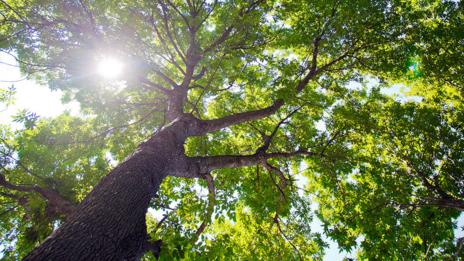
The Highline is a perfect case of adaptive reuse. This former elevated railway was converted into a public promenade and restorative ecological spine for the city. The raised streetscape helps retain rainwater, over 200 plant species, recreational green space; the freight trains are gone, replaced by people walking and cycling.
The Lowline, meanwhile, is a strategy to position state-of-the-art solar equipment to illuminate a discarded underground trolley station on the Lower East Side of NYC. This concept is to create an appealing underground common space, delivering an attractive ecological space within the heart of this crowded metropolitan environment.
Then there is Vision 42. This enterprise re-imagines an upgraded light rail transport at Midtown Manhattan as an alternative to traffic congestion. It’s designed as a crosstown, low-floor moderate speed train line traversing river-to-river at 42nd Street. Alongside is a landscaped tree-lined pedestrian street path. Vision 42 is a prototype for an entire network of walkable streets, greenways, and smart transports throughout a future New York.
Brooklyn Navy Yard (BNY) is a national model for sustainable industrial parks and green development, and home to companies that aim to be socially responsible and tech-driven, such as Terreform, the think-tank that I work for. The BNY is a former military industrial complex, converted into a clean technology and local manufacturing site; something that will be of utmost importance in any future metropolis.
This future city will still have traffic fumes as long as there are gas-guzzling vehicles plying its streets. But improving technology will enable the populace to steer clear of the most polluted zones. NYC Breathe is a wireless pollution sensor that keeps track of urban contaminants. These sensors are added to trucks, taxis, and automobiles and thus accumulate comprehensive pollution data in real-time – all of which is conveniently displayed as a detailed map.
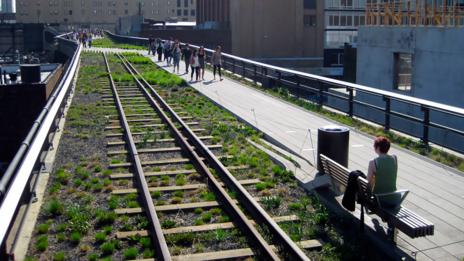
But steps are already being taken to make the city help cleans its air. Million Trees NYC has a goal of increasing its cosmopolitan woodland by planting many more trees. Street trees, park trees, and trees on public, private and commercial land are highly valuable. By planting a million trees, we can increase New York’s urban forest by an overwhelming 20%, while accomplishing the numerous quality-of-life advantages that come with them. The City of New York will plant 70% of trees in parks and other public spaces. The other 30% will come from private organisations, homeowners, and community organisations.
And what of food? Vertical Aquaponics can yield up to 800% more produce than traditional land farming in an equivalent space, while consuming 90-95% less water and power. Farms will be constructed in stacks, rising into the air. By assembling aquaponic farms vertically, it multiplies the power of its food-growing equipment, possibly yielding far more food than conventional farming – and all the time using a fraction of the space and energy.
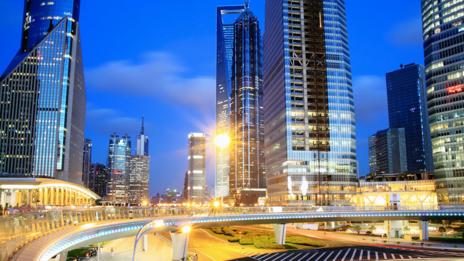
But revisioning Manhattan is more than just an academic exercise, and needs more than what is on the drawing board now. The climate is skewed and cities are partly responsible. We need to act now to observe action later. Many advocates of sustainability encourage operations to achieve the bare minimum or zero impact. These efforts try to do no further harm, but do not try to heal. We need to elevate subsistence-based systems to approaches that not only have a positive impact but are abundant throughout the city. Calculating an ecological footprint is suitable for endurance living. Reversing the effects of pollution is better still.
If Manhattan was restructured to be proactive in resetting the climate, other cites may follow. How can we do this? This next version of New York is dependent on planning and preparation. This next version of New York is dependent on us.